Mehmet Özay June 21, 2012
Considering the fact that the Union of Southeast Asian Nations was a project developed by Tunku Abdul Rahman and its first members, it can be read as the integration of Muslim Malay elements, which constitute the predominant human stock of the region. However, the distance between Tunku Abdul Rahman and the political Islamist paradigm of both Tunku Abdul Rahman and the elements that supported this project at the time constituted the most important obstacle to the manifestation of such a unity, first as a unity of Muslim Malays and then as a unity of Islamic groups within the other ethnic elements of the region. On the other hand, Tunku was inspired not only by the British education he received, but also by the fact that the colonial states of the British Kingdom were united under the umbrella of the 'Commonwealth' during the independence processes after World War II. He touches on this in depth in his Memoirs...
The formation of ASEAN was initially a much more pragmatic project aimed at ensuring the internal security of the region, rather than being driven by ideological roots. On the other hand, given the ideological stances of the participating countries, we cannot say that this formation does not have manipulative features. Especially in Indo-China, the struggle of countries such as Laos, Cambodia, Myanmar (Burma), Vietnam and Laos against various versions of communist ideology reveals that their accession to ASEAN was spread over a long period of time. For example, in 1989, when the political crisis in Cambodia came to an end, in Myanmar, when the uprisings ended or, more appropriately, were 'suppressed', and in 1990, as a reflection of the 'opening out' policy, they began to develop cooperation with ASEAN.
In the 80s and 90s, not only the territorial expansion of the European Union, but also its cultural, economic, economic and political engagements gave a push to ASEAN. The role of ASEAN's leading politicians as well as the singular initiatives of Europe, especially Western and Northern European countries, including the United Kingdom, which has been interested in ASEAN since the early days of its history, in the formation of a common denominator cannot be denied. In addition to Europe's historical contribution, the role of the United States should also be mentioned in another context. In this context, it is through the United States that the structuralist development in ASEAN has been gradual, or in other words, that this regional organization has come into contact with a global power beyond the political and economic perception of the region. The US interest in the region is, of course, linked to 'security' measures due to the nature of the Cold War era. In the context of the security phenomenon based on the use of 'brute force', first of all, we can argue that the US approach, unlike the European Union, at least on some scales, constitutes an obstacle to the formation of a union. We will discuss why this is so... But first, let's talk a bit about the 'generational' story...
The 'red belt', which emerged with the Soviet Union at the forefront, on the other hand, and especially with the influence of Chinese communism in Indo-China, the historical backdrop of Chinese communism, is embodied in the attempt to frame the Muslim Malay 'sea' below, that is, the Straits of Malaka and the surrounding Muslim Malay 'sea', in other words, Malay Archaeology, as the 'green belt'. In this framework, the 1960s are remembered as a period in which ideological divergence took place in contemporary politics as a concrete reality. The most 'glorious' example of the green belt project against the red belt was the ending of the political life of the Indonesian founding father Ahmed Sukarno by Suharto at the head of the military intelligence, in other words, the overthrow of Sukarno, who winked at China, by a general within his own military cadre. Of course, let's not forget the 'glorious' contribution of the CIA... The support given to this 'internal revolution' by the Indonesian religious movements, especially the Javanese, who fell into the American trap or willingly fell into it, is a 'lesson' that needs to be studied a lot. What kind of a 'green belt' is this that turned Javanese nationalism into a bony structure, had a devastating effect on hundreds of ethnic elements of the country and lasted for 32 years?
We mentioned brute force above... The example of Vietnam, where the US brought its hot war experience to the region, is the most popular demonstration of this. Because of this war, it is even possible to argue that Southeast Asia entered the world stage, especially as a political argument, with the Vietnam War. The 'anti-war sentiment' in European capitals, especially in the US, put the peoples of Southeast Asia at the center of the world media. However, not as a phenomenon of unity, but as the US's 'backyard' against communism... The 90s began to experience several changes at once. First, a new phase in which neo-liberal policies began to gain a foothold in the realpolitik arena in the US, while China was in the process of transitioning to a liberal economy, in stark contrast to its political communism. The latter was meant to be an invitation to a festival of 'human rights, democracy and freedoms' for Southeast Asian countries as well as other 'southern' countries. Of course, this development should not be forgotten as East Asian and some Southeast Asian countries have increased their economic productivity and gained a 'respectable' place in the globalization network. Some countries in the region, having tasted the global economic rent, are not blindly accepting the 'democratization' prescriptions offered by the West in the name of 'Asianism' or 'Asian values'. For this reason, dictatorships and political monopolies persisted in the region. Political repression on the one hand and relative economic prosperity on the other were the obstacles preventing the peoples of the region from raising their thirst for 'freedom'.
From today's perspective, the US-ASEAN i
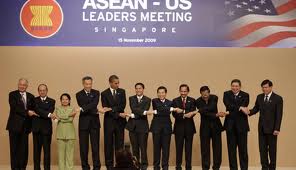
We see that their relations have left half a century behind. Yesterday, America came with its military, then with its political mechanisms, today it is reinforcing its presence in the region with its technocrats, intellectuals and academics. The recent meetings in Manila and the work to be carried out in Cambodia at the end of this year are evidence that the US is rediscovering the region in the shaping of the 21st century. Although Stapleton Roy, former US Ambassador to Singapore, has said that his country's presence in the ASEAN region is not because of China, which has emerged as a strong competitor and is gradually expanding its territorial and security perimeter and becoming a potential pressure on other countries in the region, but rather to support ASEAN's development in all aspects, the economic crisis in the US helps to explain the situation, and given that no country conducts policies based on 'single causality' anymore, it does not reflect the reality. Of course, one could also say, "Well, the ambassador cannot tell the whole truth!".
However, it is inevitable that the West will 'call on' other parts of the world to help it overcome its economic, and therefore political, dilemma. In this context, there is nothing wrong for the capitalist system and capitalists to compensate for a 'failure' in the 'Protestant developmentalism' thesis with 'Confucian developmentalism'. The means used may vary in order to achieve the ends. There is no moral problem in this at all... Exactly as Nicholas Machiavelli, a well-established representative of Western political economy, put it... What matters for the system is continuity, the geography is not so important. Moreover, in the age of globalization, this is clearly not a tangible reason.
English and Indonesian versions translated with DeepL AI